

Introduction
Long before language found its rhythm or culture carved its first symbols, scent was our silent vernacular. In the dawn of human evolution, olfaction was far more than a luxury. It was a primal ledger of survival.
Known as our second vision, the sense of smell was a biological compass that helped humans navigate the thin line between the nourishing and the toxic. It was visceral, immediate, and etched into the very architecture of the human brain.
As humanity transitioned from the primitive to the civilized, fragrance underwent a profound metamorphosis. It evolved from survival to symbolism. Nature’s raw abundance was no longer just a resource for the body, but a tonic for the soul.
At Yoga Chemistry, this ancient relationship between scent and self forms the beginning of our philosophy. Fragrance is not merely decorative. It is emotional, ritualistic, and deeply human.
The Dawn of Fragrance Mastery
The archaeological record offers a stunning glimpse into early aromatic sophistication. In the ruins of the Indus Valley Civilization, researchers have found evidence that suggests early forms of distillation and botanical extraction.
These vessels are silent witnesses to a time when early chemists had already begun exploring the art of capturing the soul of a plant, extracting and preserving natural essences with remarkable precision.
This idea continues to inspire Yoga Chemistry: that every botanical carries more than aroma. It carries memory, origin, and intention.

The Vedic Foundation of Aromatherapy
With the emergence of Vedic science, fragrance was elevated to a sacred technology. The Vedas viewed the human experience as a holistic tapestry where the senses, smell, touch, sight, and sound, were bridges to deeper awareness.
This was not simply ritual for ritual’s sake. It was an early recognition of what modern science now understands more clearly: the senses shape how we feel, respond, remember, and regulate.
The daily rhythms of Dincharya, the Ayurvedic daily routine, were designed to engage the senses intentionally, aligning the human body with the shifting cadences of the sun, the seasons, and the cycles of nature.
Our ancestors understood that to steady the mind, one must first engage the senses.
Yoga Chemistry brings this wisdom into the modern world by designing fragrances around moments of need: morning clarity, mid-day focus, evening calm, and night-time restoration.
A Journey Through the Vedic Age
The Rigveda and Atharvaveda serve as some of the world’s earliest references to botanicals, ritual, and healing. In the flickering heat of the Yagna, aromatics like sandalwood and tulsi were more than offerings. They were vehicles of purification, atmosphere, and intention.
The ancient verses carry a striking poetic resonance, describing fragrance as something that could purify, uplift, and connect. From the earthy, grounding notes of kushta to the persistent, rain-scented depth of vetiver, the Vedic landscape was a living laboratory of aromatic intelligence.
For Yoga Chemistry, this is not nostalgia. It is a design principle.
Our formulations are built around the belief that scent can support emotional states and help create a deeper relationship with daily life.

Classical Ayurveda’s Aromatic Wisdom
In the foundational texts of the Charaka Samhita and Sushruta Samhita, fragrance was codified into a precise sensory and medicinal science. Aromatic herbs were not merely pleasant. They were considered intelligent agents that could interact with the body, mind, and skin.
In classical Ayurvedic thought, aromatic materials were used to:
Harmonize the doshas, supporting the balance of Vata, Pitta, and Kapha.
Soothe the manas, directing fragrance toward the nervous system and the emotional body.
Nourish the twak, using the lipid-soluble nature of oils to care for the skin.
This wisdom also permeates Indian epics. The Ramayana’s mention of the life-restoring Sanjeevani herb illustrates a culture where the line between medicine, mythology, and botanical intelligence was deeply intertwined.
At Yoga Chemistry, we do not claim to recreate ancient medicine. Instead, we draw from this worldview: that the body, mind, senses, and environment are connected, and that fragrance can become a gentle tool for inner balance.
Ancient Rituals in a Modern World
The wellness practices of today often carry echoes of ancient Indian rituals.
Dhupan used the burning of resins like guggulu to cleanse and transform the atmosphere.
Anulepan involved the cooling grace of sandalwood paste, applied to the body as a sensory and skin ritual.
Abhyanga used rhythmic massage with infused oils, turning touch and aroma into a dialogue between the body and the senses.
Yoga Chemistry adapts this ritual intelligence into contemporary formats.
Essential oils for diffusion and diluted rituals.
Roll-ons for portable emotional support.
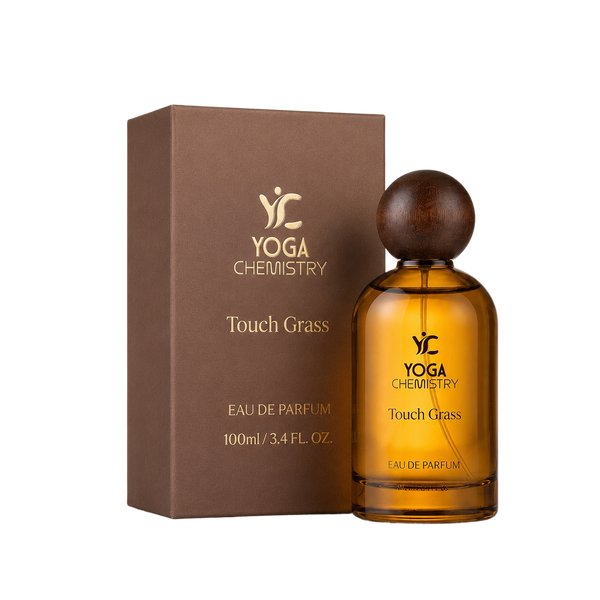
EDPs that allow you to wear an intention through the day.
This is how ancient ritual becomes modern use.

Kannauj: The Living Legacy of the Vedic Fire
If the Vedas provided the script, the city of Kannauj is the stage where the performance continues.
Known as the fragrance capital of India, Kannauj is a rare sanctuary where time seems to have slowed. It has protected the deg bhapka method, a labor-intensive steam distillation process that has remained largely unchanged for centuries.
Copper stills. Floral harvests. Patient extraction. The slow capture of aroma into oil.
For Yoga Chemistry, Kannauj represents more than provenance. It represents patience, craft, and India’s enduring intelligence in extracting emotional depth from nature.
Bridging Tradition and Science: The Role of FFDC
The bridge between this ancient craft and the modern world is the Fragrance & Flavour Development Centre.
Established in 1991, FFDC helps bring technical support, quality testing, and modern fragrance development capabilities to India’s aromatic ecosystem. It represents the kind of bridge Yoga Chemistry believes in: tradition strengthened by transparency.
The soul of rose, vetiver, sandalwood, or tulsi must not be lost to impurity, inconsistency, or careless extraction.
This is the same balance Yoga Chemistry works toward: rooted in Indian fragrance heritage, but supported by modern quality systems, testing, and traceability.

Protection and Evolution
The global recognition of Kannauj was strengthened through its Geographical Indication recognition, placing its attars alongside other regionally protected crafts.
But to honour tradition is not to freeze it.
As the world faces the ecological fragility of ingredients like sandalwood, master perfumers and fragrance houses continue to evolve, exploring sustainable bases and botanical alternatives that preserve olfactive depth while respecting the earth.
Yoga Chemistry carries this same responsibility forward.
To honour tradition is to protect its essence while making it relevant, responsible, and accessible for today.
Conclusion: The Timeless Breath
What the modern world calls aromatherapy is, in truth, the reawakening of an ancient memory.
From the primal instincts of the first humans to the sacred fires of the Vedic age, and finally to the copper vats of Kannauj, the story of fragrance is the story of humanity’s search for balance.
Scent is our most enduring link to the past, a reminder that the oldest wisdom does not merely survive. It breathes, adapts, and continues to find new forms.
Yoga Chemistry exists to carry this ancient intelligence into the present: through fragrances designed for daily rituals, emotional balance, and intentional living.